Spring/Summer
2025 Archive
A reflection on the idea that justice and dignity can be designed into our systems--or left out of them. What we build matters, as does our reason for choosing.
The write here was inspired by 'The Linnets' Wings Writers and Artists' who always show reason in their plot, design and form choices, whether poetry or prose--and by my own reading on economics.
However, in particular, these 10 scripts which are composed in article/story format was inspired by a 'Robert Reich Video,’ that was published up over on “Inequality Media" earlier this year.
--Mari
A reflection on the idea that justice and dignity can be designed into our systems--or left out of them. What we build matters, as does our reason for choosing.
The write here was inspired by 'The Linnets' Wings Writers and Artists' who always show reason in their plot, design and form choices, whether poetry or prose--and by my own reading on economics.
However, in particular, these 10 scripts which are composed in article/story format was inspired by a 'Robert Reich Video,’ that was published up over on “Inequality Media" earlier this year.
--Mari
A Guide to a Just and Sustainable World
Respect for Human Rights
Human Being Responsibilities
(HBR)
Every individual shall uphold and respect the human rights of others as enshrined in the Universal Declaration of Human Rights, recognizing the inherent dignity and the equal and inalienable rights of all members of the human being family.
Advantages:
Fostering respect for human rights contributes to stable and harmonious societies where every individual feels valued and protected. It reduces conflict, enhances social cohesion, and builds trust in institutions. When individuals respect and uphold the rights of others, it creates an environment where equality and justice can thrive, improving overall quality of life.
Human Being Responsibilities
(HBR)
Every individual shall uphold and respect the human rights of others as enshrined in the Universal Declaration of Human Rights, recognizing the inherent dignity and the equal and inalienable rights of all members of the human being family.
Advantages:
Fostering respect for human rights contributes to stable and harmonious societies where every individual feels valued and protected. It reduces conflict, enhances social cohesion, and builds trust in institutions. When individuals respect and uphold the rights of others, it creates an environment where equality and justice can thrive, improving overall quality of life.
Ripples

The market square hummed with life-vendors calling, children laughing, a blind man playing his violin by the fountain. When a group of youths snatched a beggar’s coins, Mira stepped forward.
“That’s his, just as your shoes are yours," she said, her voice steady. A bystander nodded, stepping in beside her. One by one, others followed, hands reaching to return what was taken. The youths hesitated, then relented. The beggar smiled, dignity intact. In that moment, respect rippled outwards a quiet force binding the town together, making it stronger. Justice wasn’t just law; it was the choice of every person. |
Article 2
Individuals are responsible for promoting equality and non-discrimination in their actions and attitudes. This includes challenging prejudicial behaviors and promoting inclusivity in all aspects of society. Then:
Voices join as one
Innovation blooms in trust
Unity paves peace
Voices join as one
Innovation blooms in trust
Unity paves peace
Head Square

At the café, Leo watched as a manager turned away a woman in a headscarf. “No seats left," the man muttered, though empty tables remained.
Leo stood, “She can have mine," he said, meeting the manager’s gaze. Others murmured agreement. A waiter hesitated, then pulled out a chair. The woman sat, offering Leo a grateful smile. The next day, the café posted a sign: ALL WELCOME HERE. One voice had challenged prejudice; many had followed. Inclusion wasn’t just an idea--it was action, choice by choice, moment by moment. And in that moment, the town became just a little fairer. |
Article 3
--Protection of Children
All adults share a fundamental responsibility to protect the rights and well-being of children, ensuring their safety, education, and development in a nurturing environment. This duty extends beyond immediate caregivers to society as a whole, recognizing that the welfare of children shapes the future of communities and nations.
Advantages of Child Protection
Ensuring Healthier Future Generation
Ensuring children's safety and proper development fosters a well-rounded, emotionally secure, and physically healthy generation. When children are raised in an environment where they feel protected and valued, they develop resilience and a strong sense of self-worth.
Positive Contributions to Society
Children who grow up in safe and nurturing environments are more likely to become responsi- ble and productive adults. With access to quality education, emotional support, and protection from harm, they are empowered to contribute meaningfully to society--whether through innovation, leadership, or service.
Breaking the Cycle of Poverty and Abuse
A society that prioritizes child protection helps break the intergenerational cycle of poverty and abuse. Providing children with proper education, nutrition, and emotional stability equips them with the tools they need to escape hardships and build a be ter future for themselves and others.
Stronger and More Stable Communities
When children receive the care and support they need, entire communities benefit. Reduced crime rates, improved economic stability, and greater social cohesion are among the many advantages of raising children in a secure and nurturing environment.
By upholding the responsibility of child protection, adults collectively ensure a brighter, more just, and prosperous future for all.
All adults share a fundamental responsibility to protect the rights and well-being of children, ensuring their safety, education, and development in a nurturing environment. This duty extends beyond immediate caregivers to society as a whole, recognizing that the welfare of children shapes the future of communities and nations.
Advantages of Child Protection
Ensuring Healthier Future Generation
Ensuring children's safety and proper development fosters a well-rounded, emotionally secure, and physically healthy generation. When children are raised in an environment where they feel protected and valued, they develop resilience and a strong sense of self-worth.
Positive Contributions to Society
Children who grow up in safe and nurturing environments are more likely to become responsi- ble and productive adults. With access to quality education, emotional support, and protection from harm, they are empowered to contribute meaningfully to society--whether through innovation, leadership, or service.
Breaking the Cycle of Poverty and Abuse
A society that prioritizes child protection helps break the intergenerational cycle of poverty and abuse. Providing children with proper education, nutrition, and emotional stability equips them with the tools they need to escape hardships and build a be ter future for themselves and others.
Stronger and More Stable Communities
When children receive the care and support they need, entire communities benefit. Reduced crime rates, improved economic stability, and greater social cohesion are among the many advantages of raising children in a secure and nurturing environment.
By upholding the responsibility of child protection, adults collectively ensure a brighter, more just, and prosperous future for all.
The Promise

Under the old sycamore tree, little Jamie built castles in the dirt, his laughter ringing like wind chimes. Mrs. Turner, his neighbor, watched from her porch, remembering when her own childhood had been different--cold, uncertain, and unprotected.
One evening, she saw bruises on Jamie’s arms. His eyes, usually bright, were dull. Without hesitation, she knocked on his door, her heart pounding. "Jamie left his toy outside," she said, meeting his mother’s tired gaze. Later, she made a call. Help arrived. Years later, Jamie--now a teacher--planted a sycamore outside his class-room. "Someone once stood up for me," he said. |
Article 4
Gentle hands heal earth
Roots and life in balance grow
Tomorrow breathes green
Preservation of the Environment
Every person must act as a steward of the Earth, making conscientious choices to preserve and protect the environment for present and future generations.
Advantages:
Environmental stewardship is crucial for sustaining natural resources and ensuring the planet's health. This responsibility promotes biodiversity, helps maintain ecosystems, and mitigates the effects of climate change, securing a livable world for future generations. Economically, it can foster sustainable growth and new industries, such as renewable energy and conservation.
Roots and life in balance grow
Tomorrow breathes green
Preservation of the Environment
Every person must act as a steward of the Earth, making conscientious choices to preserve and protect the environment for present and future generations.
Advantages:
Environmental stewardship is crucial for sustaining natural resources and ensuring the planet's health. This responsibility promotes biodiversity, helps maintain ecosystems, and mitigates the effects of climate change, securing a livable world for future generations. Economically, it can foster sustainable growth and new industries, such as renewable energy and conservation.
The Last Sapling
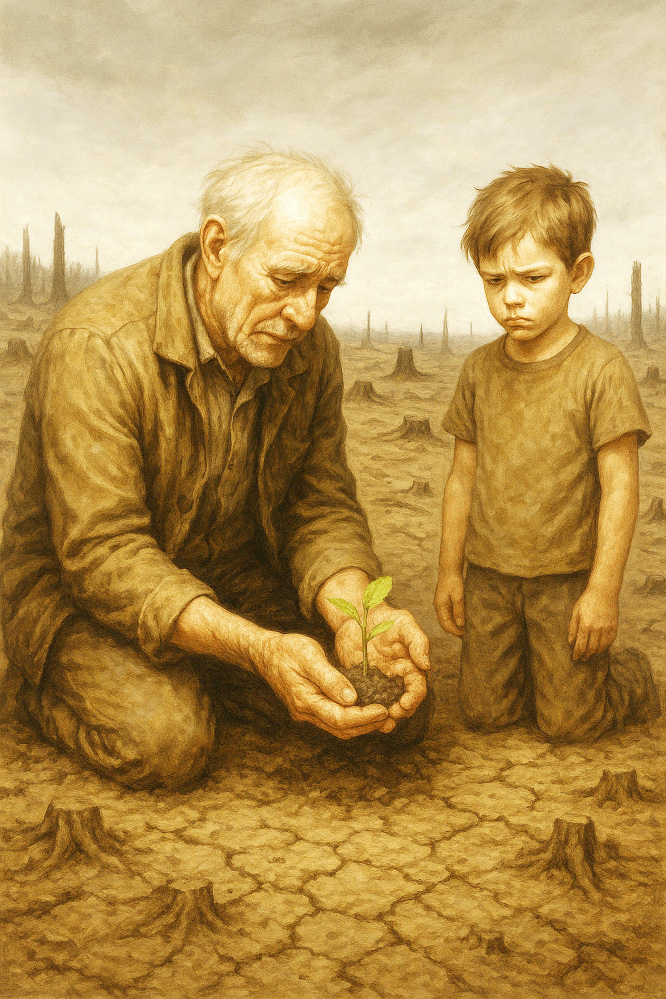
Luca’s grandfather knelt in the barren field, cupping a tiny sapling in his calloused hands. “When I was your age, forests stretched for miles," he whispered.
Luca frowned. “What happened?" “People forgot they belonged to the Earth, not the other way around." Determined, Luca and his grandfather planted the sapling together. It was just one, but in time, others followed. Birds returned, rivers cleared, and green spread where dust once reigned. Years later, as Luca’s own granddaughter knelt beside him, he smiled. “The Earth remembers kindness," he said. And the forest listened, rustling in agreement. ### |
Article 5
Ballots fill the urn
Each citizen shapes the fate
Rights flourish in light
Participation in Governance
Citizens are responsible for participating in the democratic process, including voting, staying informed on public issues, and contributing to the dialogue on governance and policy.
Advantages:
Active participation in governance ensures that leaders are accountable and that policies reflect the community’s needs and values. It strengthens democracy and can lead to more effective and equitable policy decisions. Engaged citizens are better able to advocate for their rights and needs, leading to a more responsive government.
Voices seek the truth
Debate weaves collective will
Democracy lives
Each citizen shapes the fate
Rights flourish in light
Participation in Governance
Citizens are responsible for participating in the democratic process, including voting, staying informed on public issues, and contributing to the dialogue on governance and policy.
Advantages:
Active participation in governance ensures that leaders are accountable and that policies reflect the community’s needs and values. It strengthens democracy and can lead to more effective and equitable policy decisions. Engaged citizens are better able to advocate for their rights and needs, leading to a more responsive government.
Voices seek the truth
Debate weaves collective will
Democracy lives
The Ballot Box

Jack’s grandfather had one rule--never miss an election.
“Why does it matter?" Jack asked, watching the news. “One vote won’t change anything." His grandfather sighed, tapping an old ballot stub. “Once, people fought for this right. Some still do. Every vote is a voice." On election day, Jack hesitated at the polling station. Then he stepped inside, marking his choice. The next morning, the results were announced. The winning candidate won by one vote. Jack stared at the screen, heart pounding. His vote had mattered. That night, he framed the ballot stub, just like his grandfather had. |
Article 6
Contribution to Community
Individuals shall contribute to their community’s welfare, offering support to those in need, volunteering their time and resources, and fostering a spirit of community and cooperation because:
Helpful hands extend
Warmth and hope in every deed
Neighbor hearts entwine
Advantages:
Contributing to the welfare of the community fosters a sense of belonging and solidarity among its members. It can alleviate hardships for the most vul- nerable and enhance the overall well-being of the community. Volunteerism and community support also build networks of reciprocity and trust that can be crucial in times of need.
Seeds of kindness sown
Shared burdens light the pathway
Roots and trust grow deep
Individuals shall contribute to their community’s welfare, offering support to those in need, volunteering their time and resources, and fostering a spirit of community and cooperation because:
Helpful hands extend
Warmth and hope in every deed
Neighbor hearts entwine
Advantages:
Contributing to the welfare of the community fosters a sense of belonging and solidarity among its members. It can alleviate hardships for the most vul- nerable and enhance the overall well-being of the community. Volunteerism and community support also build networks of reciprocity and trust that can be crucial in times of need.
Seeds of kindness sown
Shared burdens light the pathway
Roots and trust grow deep
The Empty Lot
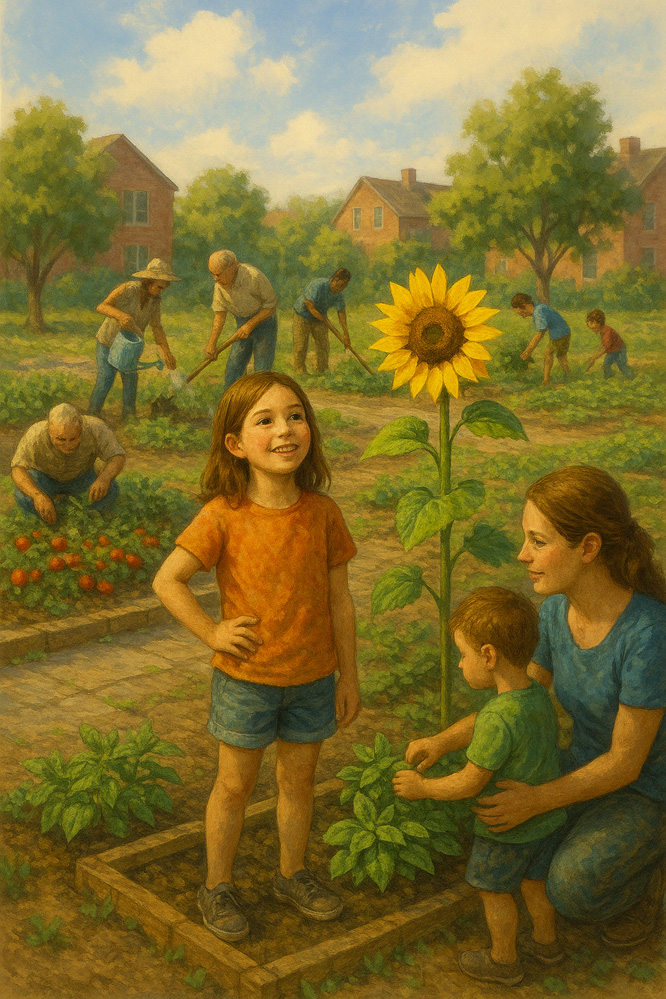
For years, the lot on Maple Street was nothing but weeds and cracked pavement. Then, one morning, a girl planted a single sunflower. The next day, an old man added tomatoes. A mother and son brought basil. Soon, the whole block joined in--digging, planting, watering.
By summer, the lot had transformed into a lush garden. Strangers became neighbors, harvests were shared, and laughter filled the air. One evening, the girl stood beside her sunflower, smiling. “It started with you," her mother said. The girl shook her head. “No, it started with us." |
Article 7
Scales balanced in hand
Truth stands firm against the dark
Justice lights our way
Upholding Justice
Each person must respect and uphold the rule of law. This includes refraining from acts of corruption, injustice, and lawlessness, and seeking fair treatment for all under the law
Advantages:
Respecting and upholding justice reduces corruption and increases transparen- cy, leading to fairer systems in which people can have confidence. It promotes equal treatment under the law, which is fundamental to a just society. A strong commitment to justice can also deter crime and foster an environment where all can feel safe and respected.
Truth stands firm against the dark
Justice lights our way
Upholding Justice
Each person must respect and uphold the rule of law. This includes refraining from acts of corruption, injustice, and lawlessness, and seeking fair treatment for all under the law
Advantages:
Respecting and upholding justice reduces corruption and increases transparen- cy, leading to fairer systems in which people can have confidence. It promotes equal treatment under the law, which is fundamental to a just society. A strong commitment to justice can also deter crime and foster an environment where all can feel safe and respected.
The Ledger
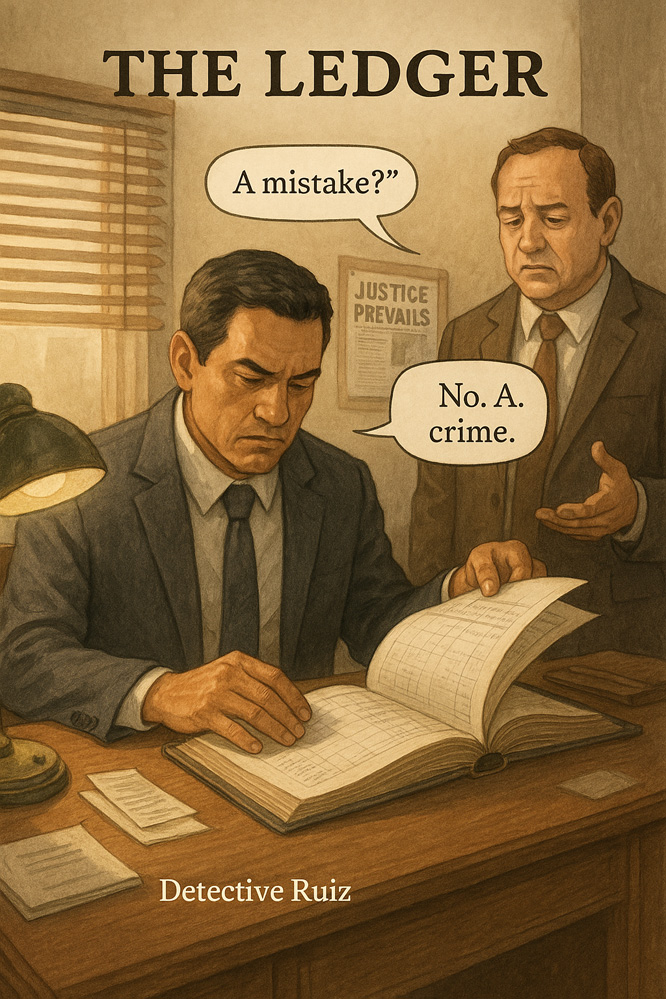
Detective Ruiz flipped through the old ledger, its pages filled with missing numbers and ghost transactions.
“A mistake?" the businessman asked, feigning innocence. Ruiz shook his head. “No. A crime." For years, bribes had stolen funds meant for schools, hospitals, and roads. People suffered while the rich grew richer. But today, the truth had a voice. Days later, the headlines read: Justice Prevails--Corruption Exposed. Children walked into newly built classrooms. A long-abandoned clinic reopened. The city, once broken, began to heal. Because one man chose integrity over silence, justice wasn’t just a word--it became action. |
Article 8
Promotion of Peace
Individuals are responsible for promoting peace and resolving conflicts through dialogue and non-violent means, actively working towards reconciliation and understanding among communities.
Advantages:
Promoting peace helps to reduce violence and conflict, saving lives, and improving the quality of life. It can lead to more stable political and economic environments, which attract investment and improve economic opportunities. Peaceful resolution of conflicts also preserves resources and energy that can be redirected towards constructive societal goals.
Calm dawn after storm
Hands join beneath olive boughs
Peace blossoms within
Individuals are responsible for promoting peace and resolving conflicts through dialogue and non-violent means, actively working towards reconciliation and understanding among communities.
Advantages:
Promoting peace helps to reduce violence and conflict, saving lives, and improving the quality of life. It can lead to more stable political and economic environments, which attract investment and improve economic opportunities. Peaceful resolution of conflicts also preserves resources and energy that can be redirected towards constructive societal goals.
Calm dawn after storm
Hands join beneath olive boughs
Peace blossoms within
The Olive Branch
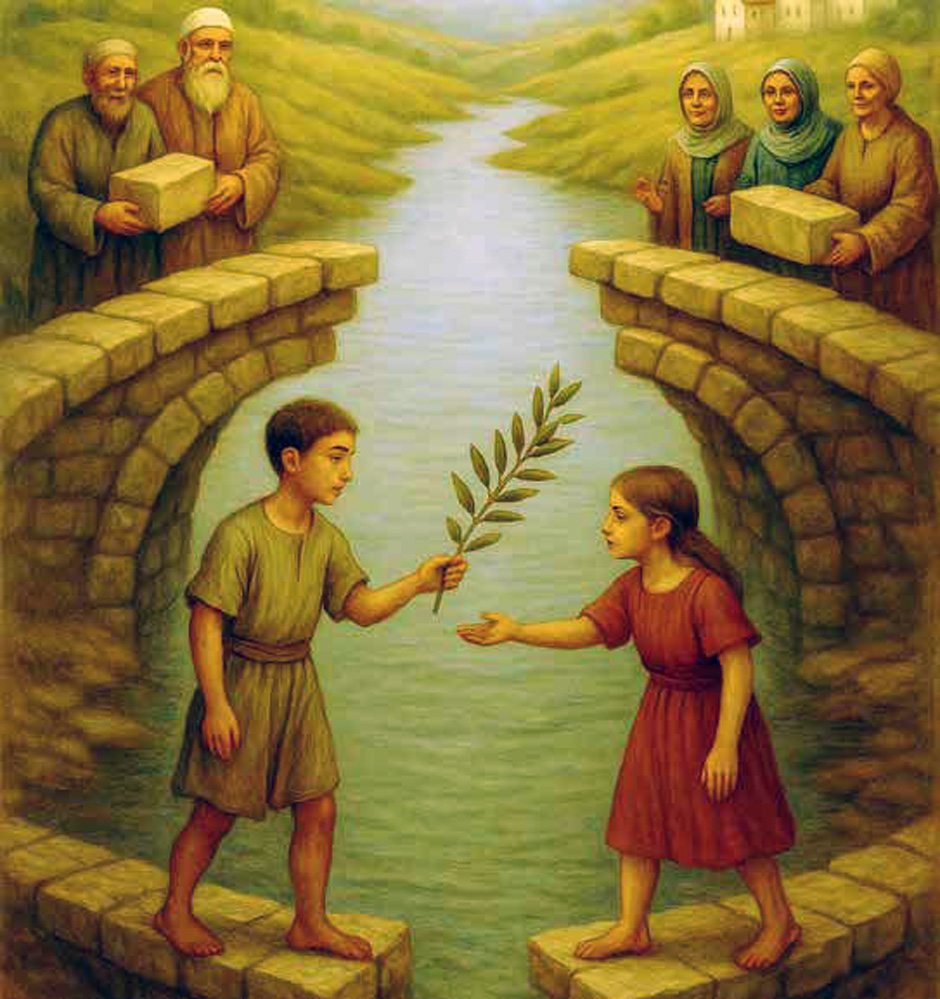
Two villages, divided by an old feud, lived in constant tension. The bridge between them stood in ruins, a reminder of past battles.
One morning, a boy from the eastern village left a loaf of bread at the broken bridge. The next day, a girl from the west placed fruit in its place. Day by day, small offerings turned into conversations. Conversations led to understanding. When the elders finally met, the bridge was rebuilt--not just in stone, but in trust. Peace, they realized, wasn’t won by warriors. It was built by those willing to extend an olive branch. |
Article 9
Pause before you post
Truth’s light guides the seeker’s heart Wisdom guards us all
Responsibility in Information
Every person has a responsibility to engage with and disseminate information responsibly, avoiding the spread of misinformation and supporting a free and fair press.
Advantages:
Engaging with information responsibly helps combat misinformation and maintain a well-informed public. This responsibility supports democratic processes and enables citizens to make decisions based on accurate information. It also fosters an informed electorate that can participate meaningfully in governance and community life.
Truth’s light guides the seeker’s heart Wisdom guards us all
Responsibility in Information
Every person has a responsibility to engage with and disseminate information responsibly, avoiding the spread of misinformation and supporting a free and fair press.
Advantages:
Engaging with information responsibly helps combat misinformation and maintain a well-informed public. This responsibility supports democratic processes and enables citizens to make decisions based on accurate information. It also fosters an informed electorate that can participate meaningfully in governance and community life.
The Headline

Nina stared at the shocking headline on her screen. Before sharing, she paused--was it true? A quick search revealed the truth: the story was fake. A misleading twist meant to spark outrage.
Instead of spreading the lie, she posted the facts. “Be careful what you share," she wrote. “Misinformation harms real people." Days later, a friend messaged her. “I almost fell for it too. Thanks for checking." Nina smiled. Truth wasn’t loud, but it mattered. In a world flooded with falsehoods, being responsible with information wasn’t just a choice--it was a duty. |
Article 10
Respect for Cultural Diversity
Individuals must respect cultural diversity and foster an understanding of different traditions and customs, contributing to a richer, more inclusive world.for:
Colours weave our world
Ancient rhythms meet new steps
Unity in dance
Advantages:
Respecting and understanding cultural diversity enriches societies, promoting a broader range of artistic, culinary, and educational experiences. It helps individuals to develop a deeper global awareness and empathy, reducing xenophobia and promoting international cooperation and peace.
Stories around fire
Tongues and tastes merge like rivers
Worlds open through care
Individuals must respect cultural diversity and foster an understanding of different traditions and customs, contributing to a richer, more inclusive world.for:
Colours weave our world
Ancient rhythms meet new steps
Unity in dance
Advantages:
Respecting and understanding cultural diversity enriches societies, promoting a broader range of artistic, culinary, and educational experiences. It helps individuals to develop a deeper global awareness and empathy, reducing xenophobia and promoting international cooperation and peace.
Stories around fire
Tongues and tastes merge like rivers
Worlds open through care
The Feast

Leila’s new neighbors were different--different clothes, different language, different food. She watched from her window, unsure. One evening, an aroma filled the air--spices warm and unfamiliar. A knock at the door startled her. The neighbors stood there, smiling, holding a plate.
“For you," they said. Lela hesitated, then took a bite. Flavors burst on her tongue--unexpected, but wonderful. The next week, she brought them her grandmother’s famous apple pie. Laughter and stories followed. In time, "different" became "friends." The table grew longer, the world smaller. And it all started with a shared meal. |