Kadar Mia
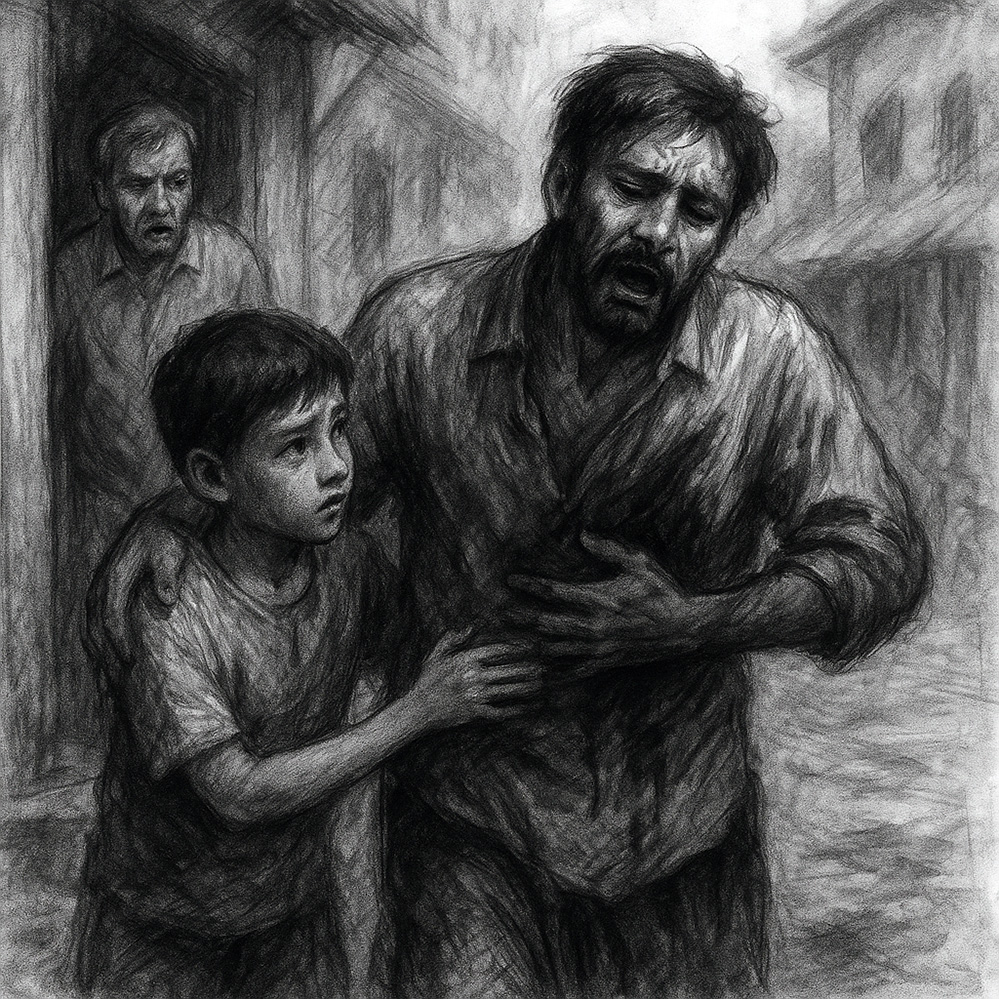
The child was Amartya Sen who later became one of the world’s best-known economists and won the 1998 Nobel Memorial Prize in Economic Sciences. Sen recounts that as a boy in Dhaka/Dacca in 1944 he saw a badly wounded Muslim day labourer named Kader Mia come through the gate of his family home after being stabbed during Hindu-Muslim communal violence. Kader Mia had gone into a largely Hindu area seeking work because his family needed food and money. Sen later wrote that this episode shaped his thinking about poverty economic unfreedom and sectarian violence.
Source:
https://www.nobelprize.org/prizes/economic-sciences/1998/sen/biographical
Source:
https://www.nobelprize.org/prizes/economic-sciences/1998/sen/biographical
The Last Errand
'A man with children does sums no politician ever sees.'
By noon the alleys of Dhaka were running with rumours. They moved faster than men slipped beneath doors climbed walls entered courtyards. Neither Hindu lane or Muslim quarter were out of bounds. A shop burned near the market. A torch was seen near there and a knife seen near where a boy had been cut down on the road by afternoon even the dogs had gone quiet.
Kader Mia stood in the doorway of his room and looked at his wife.
There was no food in the house no flour left in the tin no rice in the sack. In the corner his youngest child sat with the listless gravity too tired even to cry properly. His wife did not plead with him not to stay. That was the worst thing. She only held his gaze and in it was the plain reckoning of the poor: if he stayed they starved slowly; if he went he might not come back.
“I will be careful " he said.
But a man cannot bargain with a city gone mad.
He set out with his head lowered and his hands empty a labourer in a frayed shirt searching for work in streets where work had already given way to hatred. He knew which quarter he was entering. He knew the risk. But hunger has its own arithmetic and it is merciless. A man with children does sums no politician ever sees.
The afternoon sun struck the walls like hammered brass. The air smelled of dust sweat and something harsher beneath it smoke perhaps or fear itself. He found a warehouse yard where men sometimes got hired to lift sacks and stack timber. The gate stood open. For one absurd moment Kader thought the world might still be ordinary.
Then someone shouted.
He turned.
Faces. Three of them first then more beyond. Young men fevered eyed carrying sticks and iron. One pointed. Another spat a word at him not his name but a symbol of his tribe a religious verdict. Kader raised his hands and said the oldest thing in the world.
“I am only looking for work."
It meant nothing.
The first blow struck his shoulder and spun him sideways. The second drove him to one knee. He tried to rise because men who have known labour all their lives rise by instinct but the knife went in low and hot and the world changed shape around it. Sound narrowed. Light flared white. He remembered absurdly his daughter's hand on his sleeve that morning.
He ran then not bravely not cleanly but with the blind staggering refusal of flesh that does not wish to die. Through a side lane. Past a shuttered tea stall. Across a yard bright with dust. Blood soaked his lungi and slapped from him onto the stones. Behind him came the uproar of men who had ceased to be men together and become a pack.
A gate stood ahead. Open.
He fell through it.
Inside that compound the air seemed cooler gentler as if violence had not yet fully crossed the threshold. A child stood in the shade staring. A thin boy wide-eyed frozen by the terrible astonishment with which the young first meet the wound at the heart of the world.
Kader Mia tried to speak. To say wife. Children. Food. To say I should not have come but I had to come. To say hunger sent me where hatred was waiting.
What emerged was blood and breath.
Adults came running then; voices hands alarm cloth pressed to the wound but Kader no longer saw them clearly. He saw only the child. The boy’s face was sharp with horror but also with something else: understanding arriving too early.
In that instant Kader knew as dying men sometimes do that the witness would carry him farther than his own feet had managed. The boy would not forget this. Not the blood. Not the fear. Not the plain fact that a man can be killed not for war nor theft nor murder but for stepping into the wrong street in search of bread.
Outside the city raged on busy with its slogans and revenge.
Inside one poor labourer bled out on a stranger’s floor while a child watched history reveal its true face: That hunger and hatred are old allies and that the weakest man pays first when they clasp hands.
The boy would live.
He would grow.
He would learn to give names to things that others preferred to keep shapeless: Famine deprivation injustice. He would speak in halls of learning and write books that travelled farther than any labourer ever could. Men would call him economist thinker laureate.
But before all that he was only a child in a courtyard staring at a dying man whose last journey had been made for food.
And long after the shouting had died from the streets long after flags changed and borders hardened and history filed the day away beneath other tragedies one truth remained bright and brutal as the blade itself: Kader Mia had gone out to earn bread for his family.
The world had answered with a knife.
By noon the alleys of Dhaka were running with rumours. They moved faster than men slipped beneath doors climbed walls entered courtyards. Neither Hindu lane or Muslim quarter were out of bounds. A shop burned near the market. A torch was seen near there and a knife seen near where a boy had been cut down on the road by afternoon even the dogs had gone quiet.
Kader Mia stood in the doorway of his room and looked at his wife.
There was no food in the house no flour left in the tin no rice in the sack. In the corner his youngest child sat with the listless gravity too tired even to cry properly. His wife did not plead with him not to stay. That was the worst thing. She only held his gaze and in it was the plain reckoning of the poor: if he stayed they starved slowly; if he went he might not come back.
“I will be careful " he said.
But a man cannot bargain with a city gone mad.
He set out with his head lowered and his hands empty a labourer in a frayed shirt searching for work in streets where work had already given way to hatred. He knew which quarter he was entering. He knew the risk. But hunger has its own arithmetic and it is merciless. A man with children does sums no politician ever sees.
The afternoon sun struck the walls like hammered brass. The air smelled of dust sweat and something harsher beneath it smoke perhaps or fear itself. He found a warehouse yard where men sometimes got hired to lift sacks and stack timber. The gate stood open. For one absurd moment Kader thought the world might still be ordinary.
Then someone shouted.
He turned.
Faces. Three of them first then more beyond. Young men fevered eyed carrying sticks and iron. One pointed. Another spat a word at him not his name but a symbol of his tribe a religious verdict. Kader raised his hands and said the oldest thing in the world.
“I am only looking for work."
It meant nothing.
The first blow struck his shoulder and spun him sideways. The second drove him to one knee. He tried to rise because men who have known labour all their lives rise by instinct but the knife went in low and hot and the world changed shape around it. Sound narrowed. Light flared white. He remembered absurdly his daughter's hand on his sleeve that morning.
He ran then not bravely not cleanly but with the blind staggering refusal of flesh that does not wish to die. Through a side lane. Past a shuttered tea stall. Across a yard bright with dust. Blood soaked his lungi and slapped from him onto the stones. Behind him came the uproar of men who had ceased to be men together and become a pack.
A gate stood ahead. Open.
He fell through it.
Inside that compound the air seemed cooler gentler as if violence had not yet fully crossed the threshold. A child stood in the shade staring. A thin boy wide-eyed frozen by the terrible astonishment with which the young first meet the wound at the heart of the world.
Kader Mia tried to speak. To say wife. Children. Food. To say I should not have come but I had to come. To say hunger sent me where hatred was waiting.
What emerged was blood and breath.
Adults came running then; voices hands alarm cloth pressed to the wound but Kader no longer saw them clearly. He saw only the child. The boy’s face was sharp with horror but also with something else: understanding arriving too early.
In that instant Kader knew as dying men sometimes do that the witness would carry him farther than his own feet had managed. The boy would not forget this. Not the blood. Not the fear. Not the plain fact that a man can be killed not for war nor theft nor murder but for stepping into the wrong street in search of bread.
Outside the city raged on busy with its slogans and revenge.
Inside one poor labourer bled out on a stranger’s floor while a child watched history reveal its true face: That hunger and hatred are old allies and that the weakest man pays first when they clasp hands.
The boy would live.
He would grow.
He would learn to give names to things that others preferred to keep shapeless: Famine deprivation injustice. He would speak in halls of learning and write books that travelled farther than any labourer ever could. Men would call him economist thinker laureate.
But before all that he was only a child in a courtyard staring at a dying man whose last journey had been made for food.
And long after the shouting had died from the streets long after flags changed and borders hardened and history filed the day away beneath other tragedies one truth remained bright and brutal as the blade itself: Kader Mia had gone out to earn bread for his family.
The world had answered with a knife.